






Image
Students fresh out of college are feeling the sting of the current job market, with recent grads experiencing an unemployment rate of 5.8 to 6%, much higher than the national unemployment rate of 4.3%, according to data from the Federal Reserve Bank and the Bureau of Labor Statistics.
On top of that, the federal hiring freeze put in place in January has narrowed a key avenue for graduates seeking research positions within the government sector, though the freeze is set to expire Oct. 15.
With a variety of job fairs, industry meetups and alumni connections, the Career Development Center at OSU is helping students think creatively and persistently about ways to stand out and create opportunities for themselves, instead of simply responding to job ads.
“Broadly speaking, the private sector has been in a holding pattern: not eager to mass-hire, but not in the active process of laying off,” said Michal Kawka, director of career education at the center. “There are four main pillars of support we offer, that we think can help our Beavers gain an edge and position themselves for success here.”
Pillar 1: Industry engagement
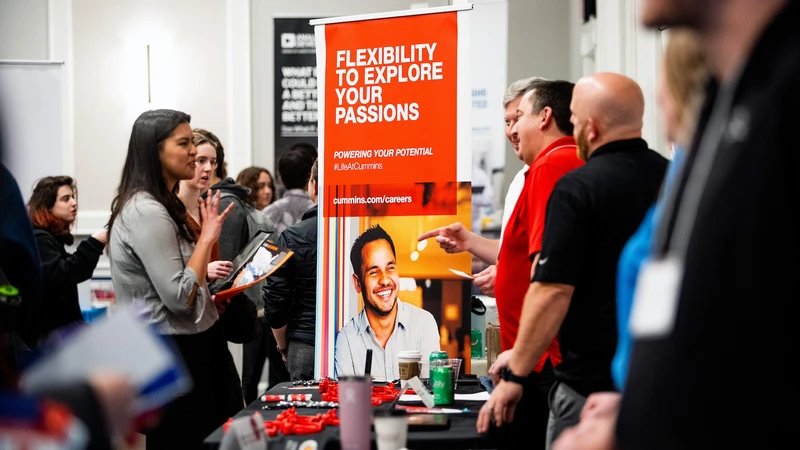
At all of OSU’s campuses and online, the Career Development Center holds a variety of events to bring companies to campus to speak about their businesses and meet with students. There will be several career fairs in October, including ones focused on civil and construction engineering, science and engineering, health, business, forestry, and environmental and life sciences. There will also be a virtual career fair for students who cannot attend in person.
“Most of these fairs are full. That means that companies elected to send their representative to come and recruit Beavers. And they often pay to come here,” Kawka said, citing these as indications that companies are still looking to hire.
The center encourages all students who will be graduating in the next year or are looking for internships to attend job fairs, even if they might not be in the specific major advertised.
“Attending a career fair and directly networking with companies truly gives students an advantage in that anyone can apply for a job at Company A, but not everyone has a chance to talk to a recruiter or a program director from that company,” Kawka said.
Once students talk with a recruiter, Kawka encourages them to stay connected, reaching out to contacts on LinkedIn and periodically checking in to let recruiters know when they’ve completed new classes or trained in new skills.
2. Career education across campus
In addition to the university-wide Career Development Center, each college has career advisers who work to integrate career-readiness content into courses and tailor information for specific fields of study. These advisers are available for one-on-one consultations and are also present at the career fairs and college-led industry events.
“We engage with employers talking about best practices, how AI is changing the application and recruitment processes, etc.,” Kawka said. “In fact, this fall we’re teaching a workshop on who is hiring and where, purely talking about what we hear from industry, what we see geographically and across economic sectors, and how to leverage your skills to land opportunities there.”
3. Alumni connections
Kawka encourages students to attend Ask Alumni panels or watch the recordings, and connect with the alumni on LinkedIn and on OSU Connections, the platform specifically for current OSU students to link up with OSU alums and talk about job opportunities or interview tips.
“All alumni on the platform explicitly say ‘I want to help,’” Kawka said. “That’s social capital that is otherwise hard to get if you are not connected to Beaver Nation.”
4. Labor market insights
Kawka said he meets regularly with the local WorkSource office to learn the employment trends in Oregon and the Pacific Northwest among private industry and government sectors.
By taking advantage of all the support and ideas offered at OSU, Kawka says students can craft a multi-tiered strategy for proactive job-seeking, rather than the more passive approach of responding to job opportunities posted online.
“That worked two years ago when unemployment was 3.9%, and we had more employers wanting to come to career fairs than we had space for,” he said. “Today it is much more challenging, and I would say 80% of our strategy should be focused on creating opportunities, rather than responding to opportunities.”
link
More Stories
Staying authentic: Why your foundation matters more than ever in career growth
Insurance career program offers personal lines training
ISSA To Host Global Virtual Summit for Personal Trainers, Fitness Brands