






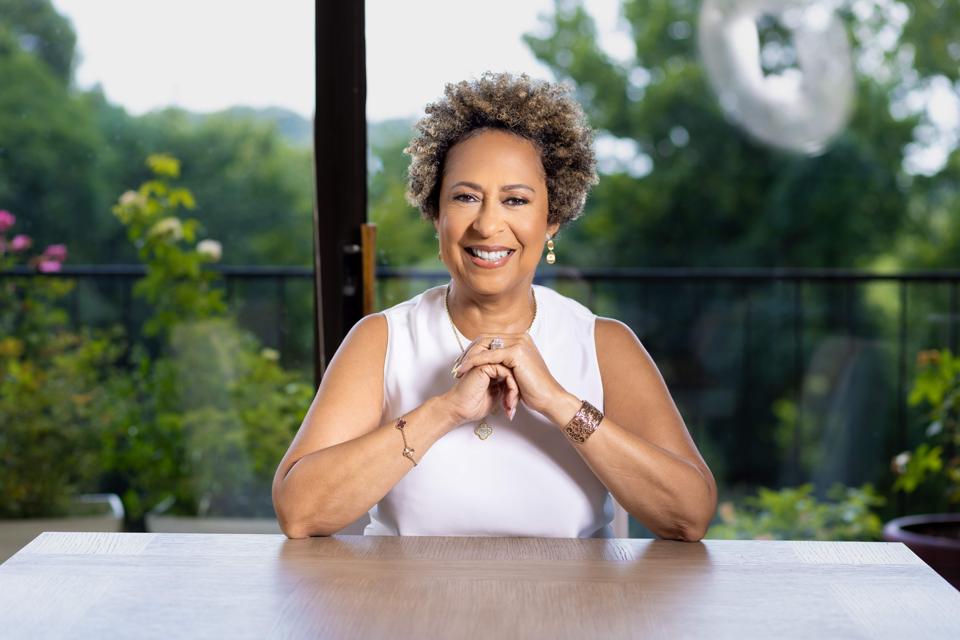
Cheryl McKissack Daniel, CEO at McKissack & McKissack
McKissack & McKissack is the oldest Black-owned architecture, engineering, and construction firm in the United States.
For more than two centuries, the McKissack family has been building America—literally. Their story, captured in Cheryl McKissack Daniel’s new book The Black Family Who Built America; The McKissacks, Two Centuries of Daring Pioneers, is one of resilience, reinvention, and triumph in the face of systemic barriers. As CEO of McKissack & McKissack—the oldest Black-owned construction company in the United States—McKissack Daniel represents both the legacy of Black entrepreneurship and the ongoing challenges of family-owned business succession. “It took us 100 years to become an overnight success,” she noted. Today, she leads billion-dollar projects in New York City, but the roots of her family’s enterprise stretch back to 1790, when an enslaved boy named Moses McKissack was forced into the brickmaking trade.
Black Entrepreneurship That Shaped America’s Story
Cheryl McKissack Daniel’s book The Black Family Who Built America
McKissack & McKissack is the oldest Black-owned architecture, engineering, and construction firm in the United States.
The McKissack family’s story begins with Moses McKissack, an Ashanti child brought to North Carolina in chains at age 11. Trained by his enslaver in bricklaying and carpentry, Moses became foreman of a building crew, erecting barns, homes, and warehouses across the South. His son, Moses II, carried that legacy forward in Tennessee, where, after emancipation, he established McKissack Contractors—one of the earliest Black-owned businesses in the Reconstruction era.
The family’s skill and artistry were undeniable. By the early 20th century, Moses III and his brother, Calvin McKissack, became the first licensed Black architects in America, founding McKissack & McKissack in 1905. The firm went on to design historically Black colleges and universities (HBCUs) such as Fisk University and Tuskegee, as well as many churches.
Their rise came at a time when the cultural tide was turning against Black progress. The 1915 film The Birth of a Nation—which glorified the Ku Klux Klan and vilified African Americans—cemented racist stereotypes that still echo today. The McKissacks’ achievements stood as a living rebuttal to that false narrative. “Our history proves that African Americans were not just laborers—we were builders, innovators, and entrepreneurs,” McKissack Daniel emphasized.
Family-Owned Business Succession At McKissack
The McKissack story is as much about survival as it is about building. In the 1980s, McKissack Daniel’s father suffered a massive stroke, leaving her mother, Leatrice Buchanan McKissack, to take the reins of the company. Though she had no formal training in architecture or business, Buchanan McKissack drew on her sharp instincts and perseverance to keep the firm alive. “Back then, women couldn’t even get bank loans without a male co-signer,” McKissack Daniel recalled. “But my mother was determined to preserve the business so that one of us—her daughters—could take it over.”
McKissack Daniel eventually did. After training at Turner Construction in New York, she launched her own firm in 1991, leveraging New York City’s minority- and women-owned business (M/WBE) programs to break into the city’s construction market. Those early programs gave her a foothold, but succession was anything but smooth. When her mother’s Southern offices became overextended and cash-strapped, McKissack Daniel had to make the painful decision to shut them down. “It was difficult, but we had to preserve the name and the legacy,” she sighed.
This is where family-owned business succession becomes more than a business case study. For the McKissacks, it was about safeguarding two centuries of Black entrepreneurship against the very real threat of erasure.
A Black Woman Breaks Barriers In The Construction Industry
Atlantic Yards, Long Island Rail Road Vanderbilt Yard Relocation/Barclays Center Arena
McKissack & McKissack is the oldest Black-owned architecture, engineering, and construction firm in the United States.
McKissack Daniel’s breakthrough came with the Barclays Center in Brooklyn, home of the Nets. When the Barclays Center deal came together, McKissack Daniel found herself deep in Brooklyn’s thorny community politics, sitting across from developer Bruce Ratner. She made one thing clear: McKissack & McKissack wouldn’t settle for a subcontractor role—they wanted to be the prime contractor. “If not us, then who?” she asked herself when advocating for Black firms to take leadership roles.
From there, McKissack & McKissack cemented its reputation as a trusted partner on mega-projects, from Columbia University’s Jerome L. Greene Science Center to the modernization of JFK Airport. The firm also became a joint venture partner with the Metropolitan Transportation Authority (MTA), moving from oversight contracts into direct construction work.
Yet, the road remains steep for Black women in the construction industry. McKissack Daniel knows firsthand the challenges that Black women face in the construction industry—securing bonding, raising capital, and being taken seriously in boardrooms still dominated by men. “Your revenues can be $100 million, and your profit negative [can still be a loss],” she explained. “That’s the kind of risk women of color in this industry face.”
Her ability to push through those challenges reflects not only personal resilience but also the collective strength of generations before her, as well as her belief in the power of entrepreneurship to build wealth and control one’s own destiny. “The power of legacy, entrepreneurship, and owning your own business is the true way to control your destiny,” McKissack Daniel said. “I hope the book inspires people.
The story is resonating beyond the construction world. “This extraordinary celebration of Black excellence, resilience, and innovation is a powerful reminder that Black history is American history,” wrote Charlamagne tha God, New York Times bestselling author. Derrick Johnson, president and CEO of the NAACP, added: “This book makes clear that the McKissack family should be mentioned in the same conversation with those prestigious last names so often heralded as models for what we call the American Dream.”
Black Entrepreneurship Legacy Still Building America
The McKissack family’s journey—from Moses laying bricks under bondage to McKissack Daniel directing billion-dollar infrastructure projects in New York City—is more than a family saga. It is a story of America itself: how Black labor and ingenuity built much of the nation, even when denied recognition or dignity.
Today, McKissack & McKissack is not just a construction firm but a symbol of perseverance and possibility. Through The Black Family Who Built America, McKissack Daniel is ensuring that her family’s story, and the story of Black entrepreneurship, is not sidelined but centered in America’s narrative.
While it might look like McKissack Daniel was an overnight success, it took 100 years. That success—rooted in family-owned business succession, tested by adversity, and sustained by determination—reminds us that the Black family who built America is still building it today. It also highlights the power of Black entrepreneurship, as more Black women follow in her footsteps, leading the way in construction, healthcare, manufacturing, training and development, and AI that are reshaping the economy.”
link
More Stories
Local entrepreneur being inducted into business hall of fame | West Prince Graphic
Global hub for technology and entrepreneurship
Michelle “Meme” Lovett Recognized for Entrepreneurship, Media Leadership, and Community Impact