






Teens Adrift In Transition From School To Work
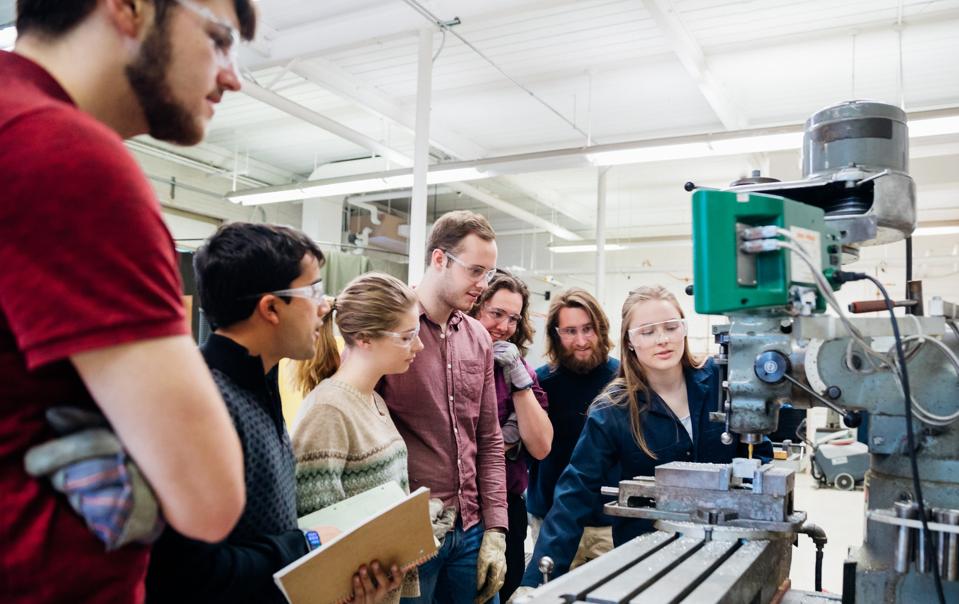
Young people gaining career experience that prepares them for the transition from school to work.
Teenagers from around the world enter the workforce blindfolded. They are intensely interested in future careers. Their expectations, though, are outdated because they are not aware of the career options available to them. Family background plays a significant role in shaping this mismatch, more than real-world insights or aptitude.
This news of teens adrift as they move from school to work is the central message from a new report released by the Organization for Economic Co-operation and Development (OECD) on the State of Global Teenage Career Preparation. The report uses 2022 data from the OECD Programme for International Student Assessment (PISA). It surveyed roughly 690,000 15- and 16-year-old students from more than 80 countries, including the U.S. OECD began collecting this data in 2000 with a smaller group of countries, which allows it to make comparisons over this time period.
Here are three top-line insights from the OECD report that apply across all the countries that participated in the survey.
- Roughly four out of 10 students are unclear about their career expectations, double the number from about a decade ago.
- A gender gap remains in students’ aspirations to work in sectors like information technology and healthcare. For example, 11% of boys report that they will work in information technology at age 30, compared to 1.5% of girls.
- Students’ job preferences focus on a few jobs in the professions, greatly exceeding what is projected to be the actual demand for these professions. For example, 50% of girls and 44% of boys expect to work in one of 10 jobs, with little change in job preferences since 2000.
A Career Development Dashboard
The OECD report is organized by eight career development topics that cover roughly two dozen issues that are the basis for a Teenage Career Readiness Dashboard. This Dashboard allows for comparisons between countries on all the issues. Here are the eight topic areas.
1. Career uncertainty: Do students have clear plans? Does it matter? The report suggests that career uncertainty contributes to different student behaviors, including school disengagement.
2. Career planning: What are students’ job expectations? Have they changed over time? How do they compare to actual employer demand? The report provides details on how access to planning resources is uneven, especially for lower-income students.
3. Career alignment or misalignment: Do students understand what they need to do to achieve their job plans? Many teens hold unrealistic or outdated career goals. Students prioritize a narrow band of high-status occupations, neglecting in-demand technical careers.
4. Career aspirations: Are students’ education plans driven more by social background than ability? The report finds that socio-economic background has a significant influence on aspiration levels. Disparities are particularly stark, with low-income students less likely to envision themselves in professional careers.
5. Career guidance: Are students participating in career guidance activities that make a positive impact on their lives? Most students worldwide report limited access to career guidance, with the quality and consistency of guidance varying dramatically.
6. Career development: Are guidance systems responding effectively to social inequalities? Career fairs, job shadowing, and job fairs are critical but underused. According to the Dashboard, roughly one out of five (22%) U.S. students report having “spoken to a career advisor outside my school” which is the fifth lowest rate among those more than 80 countries participating in the survey.
7. Fear for the future: What do students think about the state of their career preparation? Roughly half of student respondents agree or strongly agree with a statement that asks whether they are worried about not being prepared for life after high school.
8. Employer engagement: How are employers engaged in school activities and career development? Does this make a difference? The U.S. significantly lags behind OECD countries in offering students structured career development activities like internships and job shadowing.
Are U.S. Students Prepared For Jobs?
According to YouScience’s 2025 Post-Graduation Readiness Report, 72% of recent high school graduates feel only slightly or moderately prepared for life beyond high school. Over three out of four (77%) said they would have engaged more in school had they known their strengths or career options.
A report from Gallup, the Walton Family Foundation, and Jobs for the Future, which includes over 1,300 16- to 18-year-old Gen Zers and their parents, conveys similar sentiments about this age group. Fewer than three out of 10 think they are “very prepared” to pursue any of eight post-high school pathways, including college, a job, the military, or a certification program. Even among students most eager for a particular path, less than half feel ready to take the first step.
Finally, a report called The Broken Marketplace from the Schultz Family Foundation and HarrisX of 16- to 24-year-olds, parents, counselors, educators, and employers offers a summary of this broken school to work pipeline: “Many young Americans seek professional success but face fractured pathways from high school to the job market. [They] feel stalled at the starting gate. The result is a Broken Marketplace….”
Hiring managers report that college graduates are not doing much better. A Resume.org study of over 1,000 managers found that 60% believe recent graduates are unprepared for the workforce. Over two-thirds (65%) reported firing new graduates in the past year.
Among companies that fired new graduates, nearly half of hiring managers (48%) cited a lack of motivation or initiative as the top issue. In addition, they noted a lack of professionalism (39%), excessive phone use (39%), poor time management (38%), and an attitude of indifference (37%). Only 58% said they would consider hiring from the 2025 graduating class.
Job Search Pain Points And Career Amnesia
The OECD report and the additional U.S. data suggest that there are at least three job-launch pain points that prevent young people from successfully navigating their early careers. The first is an exposure gap, which refers to the fact that too few students are aware of the available career options or understand the various paths to achieve them.
The second pain point is an aspiration gap, where students do not believe they can achieve their goals. This is often due to a lack of self-confidence or other barriers, like the absence of a degree or other credential. Finally, there is an experience gap that comes from young people’s lack of work-based activities, such as internships or apprenticeships, which help them connect their learning to the world of work.
The exposure gap is likely to play a significant role in worsening the other two. If students are not exposed to job options, they are unlikely to aspire to a career or acquire the knowledge, networks, and experiences necessary for success. According to the OECD report, students who recall speaking to career professionals or participating in job shadowing are far more likely to have career goals aligned with labor market needs. The result is career amnesia, with young people forgetting that work lies ahead or believing that their dreams require paths they neither see nor understand.
Lessons For The U.S.
Countries like Germany and Switzerland outperform the U.S. in nearly every dimension of career readiness. Their success likely stems from robust vocational education systems, early exposure to workplace options, and strong collaboration between schools and employers. This includes making apprenticeships a mainstream approach to education and training for a career.
In contrast, the U.S. typically views career exposure and experience as peripheral. Many schools lack career-focused curricula, and employers too often sit on the sidelines rather than co-design career pathways education programs.
The U.S. public, including young people, reports in multiple polls that career preparation should be a priority for schools and colleges. This is leading to reimagining what it can be for young people.
For example, career navigation is becoming an essential part of what K-12 schools (and colleges) view as one of their critical roles. This includes helping high school students create a career plan informed by self-assessment, labor market data, and hands-on experience. Another example is expanding opportunities for high school students to engage in work-based learning, like internships, apprenticeships, and other work experiences.
The OECD report serves as a reminder that closing the exposure, aspiration, and experience gaps must occur early in a young person’s career preparation. The longer we wait, the more likely our future workforce will get lost in transition.
link
More Stories
Staying authentic: Why your foundation matters more than ever in career growth
Insurance career program offers personal lines training
ISSA To Host Global Virtual Summit for Personal Trainers, Fitness Brands