





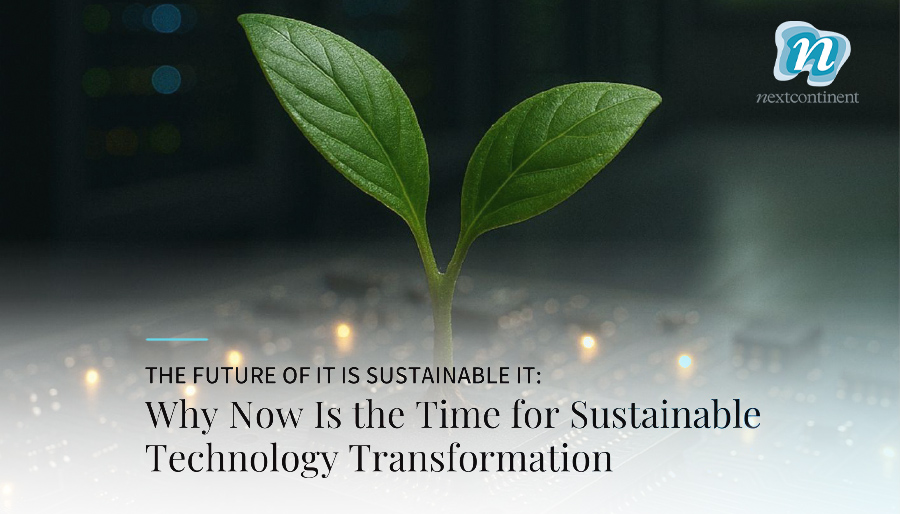
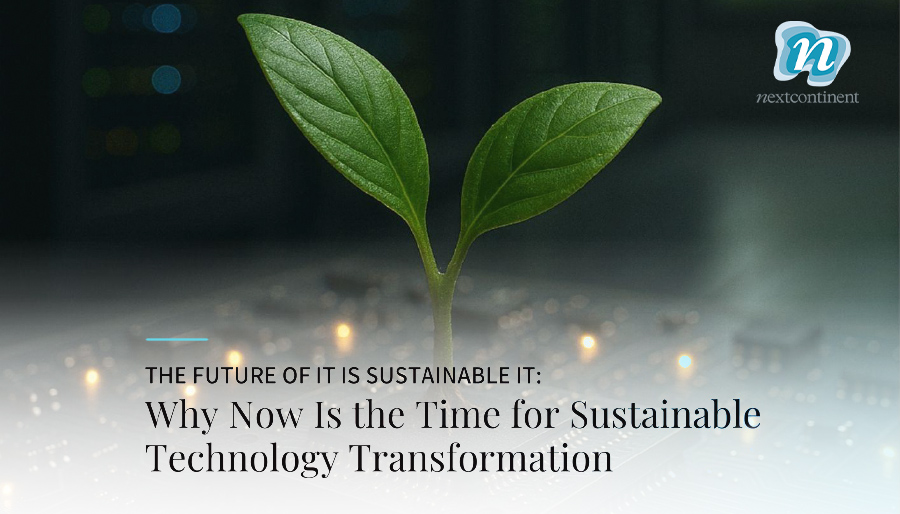
As customers, employees, investors, and the public at large all increasingly demand more responsible digital practices, many organizations are reevaluating how their technology is funded, developed, and delivered. That is according to a new report from Nextcontinent, which explores why businesses are prioritizing sustainable IT.
Environmental, social, and governance (ESG) in IT can take several forms. It can involve the optimization of data centers to consume less electricity or can focus on prioritizing the repair and recycling of devices rather than disposing of them. It can also, for example, involve the ethical design of software to ensure digital tools are inclusive and do not perpetuate unfair biases
EGS commitments have moved from the periphery to the core of business operations in many industries. This transition has been accelerated by strict European regulations, like the AI Act, which demand the same level of transparency and accountability from technology departments as those expected from financial divisions.
“Stakeholders expect companies to align their technological practices with their ESG commitments,” notes the Nextcontinentwhite paper.
“This stems from ethical concerns (algorithmic biases, privacy violations), environmental concerns (digital CO2 emissions now exceed civil aviation), and societal concerns (cybersecurity and misinformation risks).”
Beyond compliance
Adopting sustainable technology offers benefits that extend beyond legal compliance. Organizations that prioritize these practices often see improved resource efficiency and increased public trust.
The need for change is urgent, as carbon emissions from digital activities now surpass those generated by the global aviation industry. To address this, companies are beginning to evaluate their infrastructure and the ethical implications of their software choices to ensure they are not causing social harm or privacy violations.
Beyond simply complying with the increasingly demanding regulations, by pushing for a more sustainably IT system, companies can also look forward to creating additional value thanks to greater resource efficiency and more trust among stakeholders.
Building a plan for action
Success in this area begins with a thorough assessment of a company’s current impact. For example, a major insurance provider in the United Kingdom recently identified its primary sources of waste and established a roadmap to reduce its technology-related emissions by one third.
Experts suggest that organizing data by specific business areas rather than in one central location can help teams take ownership of their environmental footprint and foster innovation.
Ultimately, this transformation requires a commitment to the entire lifecycle of a product, from its initial design to its final disposal. By using specialized tracking tools and intelligent forecasting, businesses can reduce waste and support a circular economy.
Realizing these goals depends on a shift in corporate culture that includes employee education and the creation of various teams with different areas of focus. Organizations that implement these strategies now will be best positioned to lead a market that increasingly values ethical and efficient technology.
“Sustainable IT is no longer a question of if, but how. The organizations that act now with structure, intention, and realism will be best positioned to meet tomorrow’s challenges,” notes the report.
“The question is not whether sustainable IT transformation is necessary: It’s how quickly your organization can implement it. The organizations that embrace this transformation today will be the market leaders of tomorrow.”
link
More Stories
Aviation and Aerospace Expert Scott Davidson Joins FTI
How INTLOOP Is Driving Digital Transformation and Global Growth as Japan Faces a Shrinking Workforce
Risk Management Consulting Services Market to Reach USD 15.0